
Orchard Orbweaver
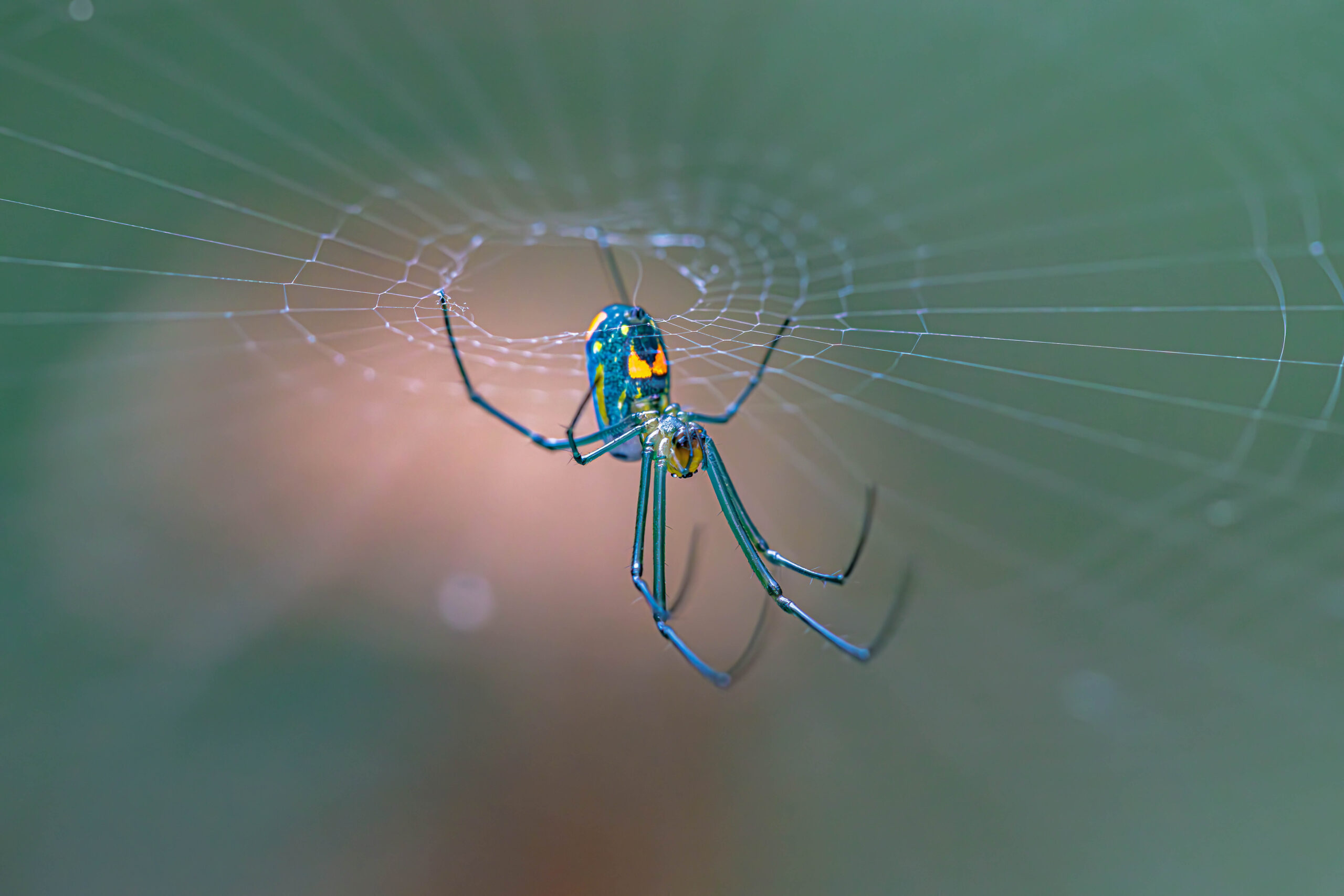
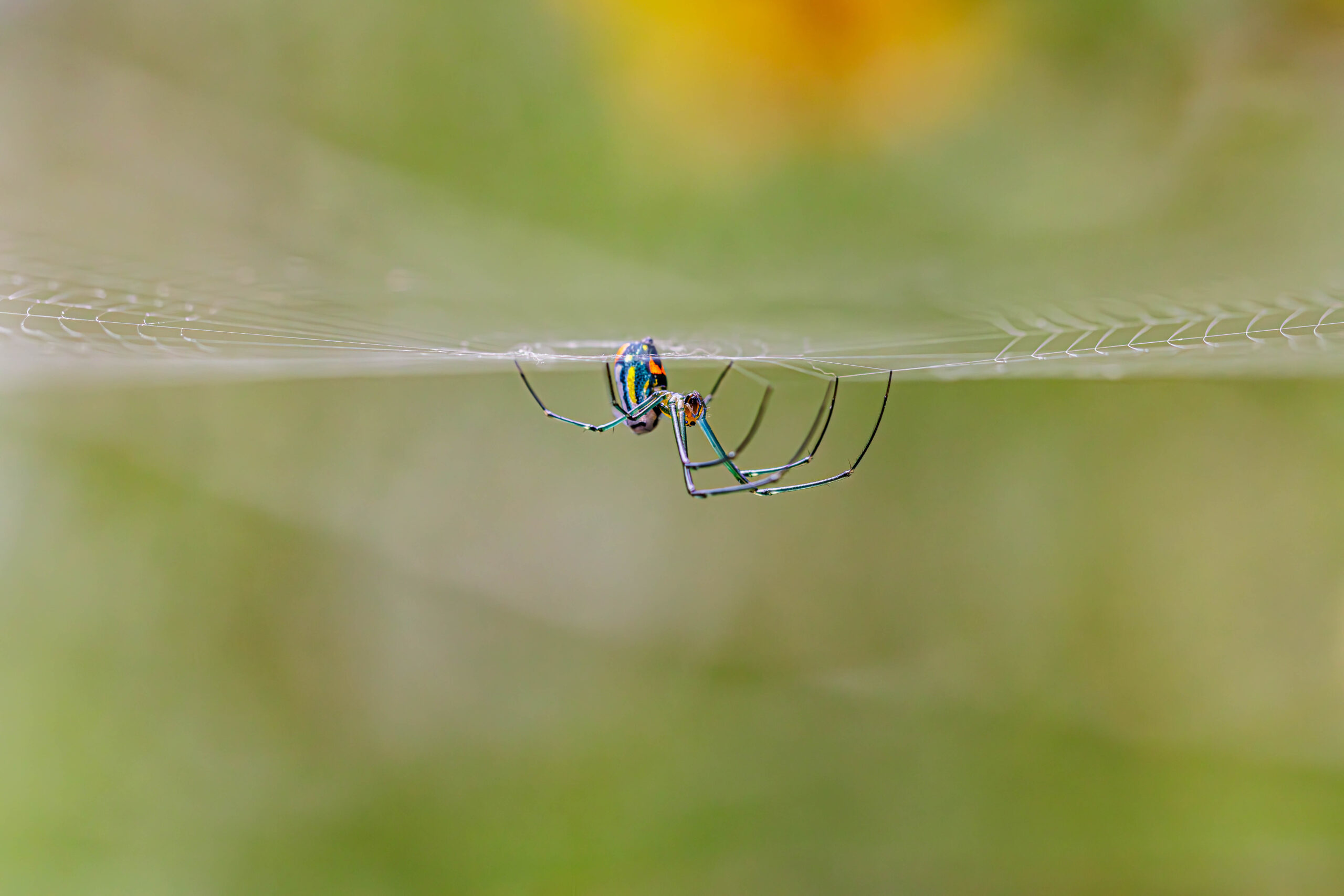
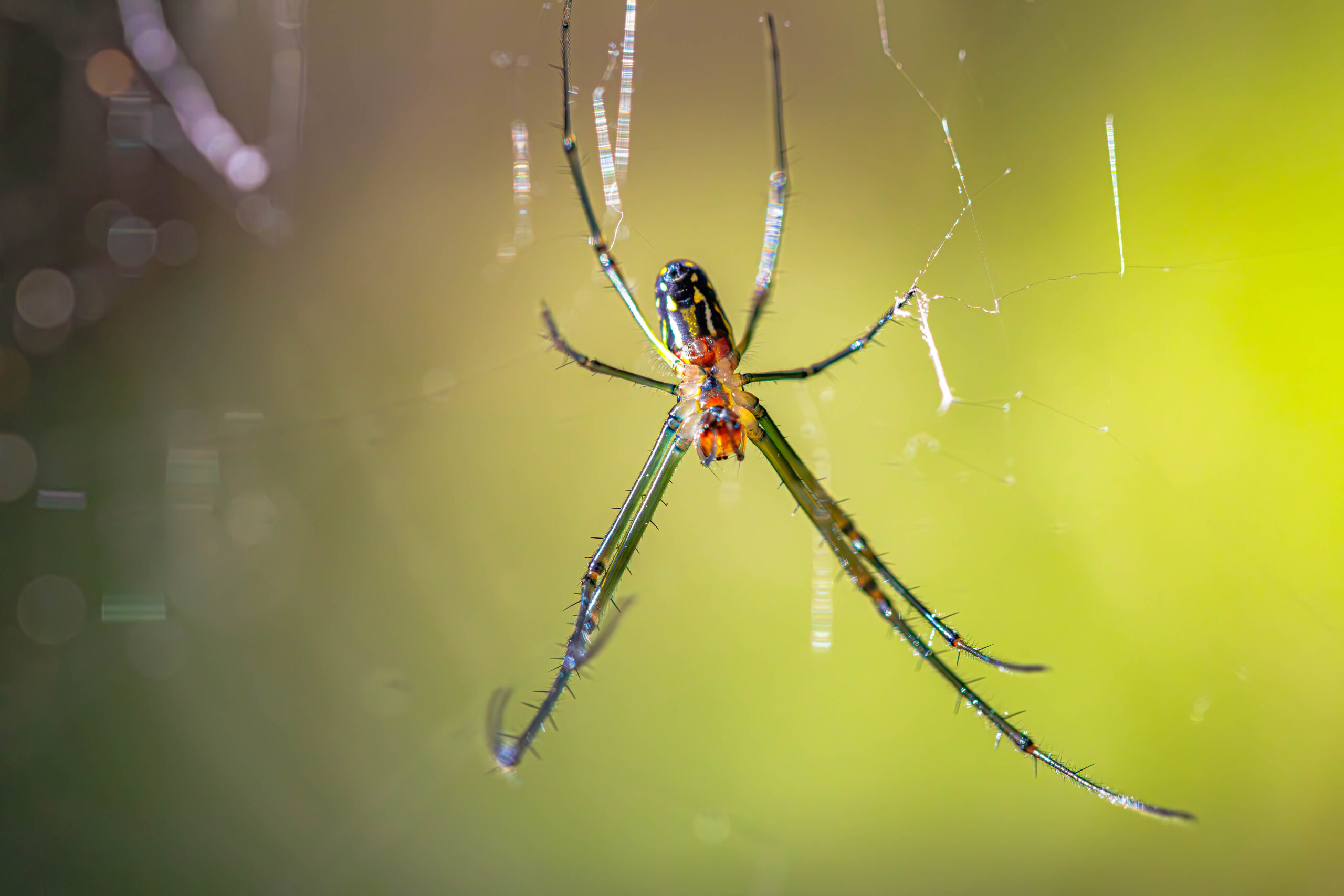
The orchard orbweaver, a small orb weaving spider that is known for its beautiful multicolored patterns and long legs. Harmless to humans and cautious by nature, they can be found hanging in the centers of circular, orb like, webs awaiting their next meal.
common Name: Orchard Orbweaver
Scientific name: Leucauge argyrobapta
Family: Tetragnathidae (Long-jawed Orbweavers)
Genus: Leucauge
Extinction level: Globally Secure/Stable
Size: 6–8 mm (0.24–0.31 in)
Color: Metallic silver or blue abdomen with black lines and orange markings near the rear. Legs are long and green to yellow-green.
Eye Type: Eight simple eyes arranged in two rows. These eyes detect motion and light but do not form detailed images.
Mouth type: Chelicerae (fangs)
Identification: The orchard orbweaver is easily recognized by its distinctive coloring and pattern, It usually hangs upside down in the center of a delicate orb web that is often angled or slightly horizontal rather than vertical like many other orb-weaving spiders.
egg stage: 2-3 weeks
Juvenile Stage: 1-3 months
Adult Stage: 1-2 months
Photos: in these photos you can see the distinctive pattering and with this specific spider, a much more blue tone.
Domain: Eukaryota
KINGDOM: animalia
PHYLUM: Arthropoda
CLASS: Arachnida
ORDER: Araneae
SUBORDER: Araneomorphae
FAMILY: Tetragnathidae (Long-jawed Orbweavers)
GENUS: Leucauge
SPECIES: Leucauge argyrobapta
Authority: Adam White
YEar: 1841
History: The species was first described in 1841 by Adam White, a Scottish zoologist at the British Museum in London. White studied specimens collected during expeditions to the Americas and formally described the spider from preserved museum material. His work was a large part of the early effort to classify newly discovered arthropods. later, Modern researchers separated southern populations from the similar Leucauge venusta, recognizing them as Leucauge argyrobapta.
egg STAGE: After mating, the female produces small papery silk egg sacs and attaches them to foliage nearby. Each sac contains dozens of pale yellow eggs, bundled together inside layers of protective silk. Depending on temperature, the eggs hatch in roughly two to three weeks.
Juvenile stage: Newly hatched spiderlings are extremely small and pale. Shortly after emerging they disperse, sometimes using ballooning, where they release silk threads that allow wind currents to carry them away. Juveniles build tiny orb webs in low vegetation and feed on very small insects such as gnats and midges. As they grow they molt multiple times, shedding their exoskeleton to increase in size.
Adult Stage: After several molts the spider reaches maturity. Adults develop their full coloration and males begin looking for mates.
Mating Habits: Male orchard orbweavers search vegetation for the webs of adult females. When a male finds a female’s web he produces distinct rhythmic vibrations along the silk strands to signal that he is a potential mate rather than trapped prey. Before mating, the male prepares sperm by spinning a small sperm web, depositing sperm onto it, and drawing it into his specialized reproductive appendages called pedipalps. If the female accepts his approach, the male carefully moves beneath her and inserts one pedipalp at a time into the female’s epigyne, the reproductive opening on the underside of her abdomen, transferring sperm. Because males are much smaller than females they must remain cautious during the process, as females may attack if the vibrations are mistaken for prey. After mating the male usually retreats from the web while the female continues hunting and later produces egg sacs nearby.
Egg laying Process: After mating, the female orchard orbweaver produces eggs within her abdomen and then moves to nearby vegetation close to her web to construct an egg sac. She first spins a small silk platform attached to a leaf, stem, or branch, where she deposits the eggs in a small cluster. The eggs are pale yellow and she can lay 50-150 eggs per sac. the female then covers the cluster with multiple layers of dense silk, forming the cotton-like egg sac that protects the developing embryos from predators and environmental damage. the mother stays nearby until the spiderlings hatch and disperse.
Death Stage: Death generally occurs after mating and after the female lays her last sac of eggs. As they get older, their activity slows, they move less, and perform fewer repairs on their webs. Once they die, their legs curl up and they drop from their webs. Even after death, the egg sacs are generally enough to keep the eggs safe and provide spiderlings with a healthy chance at life.
Habitat: Orchard orbweavers prefer warm environments with dense vegetation and abundant insect populations. They are commonly found in gardens, shrubs, orchards, woodland edges, and wetlands. Their webs are usually built on low branches or between stems roughly 1–2 meters above the ground.
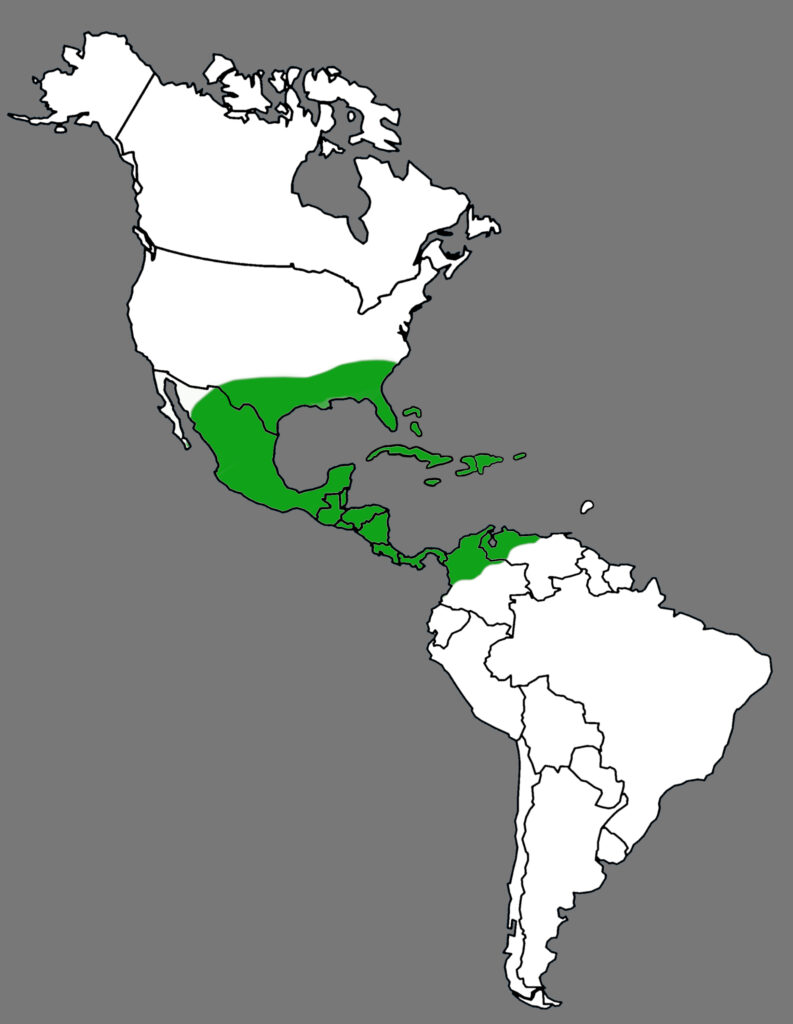
Range: The orchard orbweaver (Leucauge argyrobapta) is found throughout the southeastern United States, extending south through Mexico, Central America, and parts of South America, as well as many Caribbean islands.
feeding group: predatory insectivores
Trophic Level: Secondary Consumer
Common juvenile prey: Tiny flying insects such as gnats, midges, and small flies
common adult prey: Mosquitoes, flies, gnats, small moths, and other small flying insects
main juvenile predators: Ants, predatory insects, parasitic wasps, and larger spiders.
main adult predators: Birds, wasps, lizards, and larger spiders.
Nymph Ecology: Young orchard orbweavers construct small orb webs in low vegetation and begin hunting immediately after dispersal. These early webs allow them to capture very small insects while they grow through several molts toward adulthood.
Adult Diet and Hunting Strategy: Adults rely entirely on their orb web to capture prey. The spider hangs upside down at the center of the web and detects vibrations caused by trapped insects. When prey strikes the silk threads the spider quickly approaches, wraps the insect in silk, and delivers a venomous bite before feeding.
Behavior and Daily Activity: Orchard orbweavers are generally active during daylight hours. They remain suspended at the hub of their web monitoring vibrations through the silk strands. Webs may be repaired or rebuilt when damaged by wind, rain, or struggling prey.
Tolerance and Indicator Meaning: Because orchard orbweavers depend on stable vegetation and healthy insect populations, their presence often indicates a balanced garden or woodland ecosystem.
Predators and Pressures: Both juvenile and adult spiders face predation from birds, wasps, ants, and other spiders. Environmental pressures such as heavy rain, wind, and disturbances that destroy webs can also affect survival.
