
Blue Dasher Dragonfly
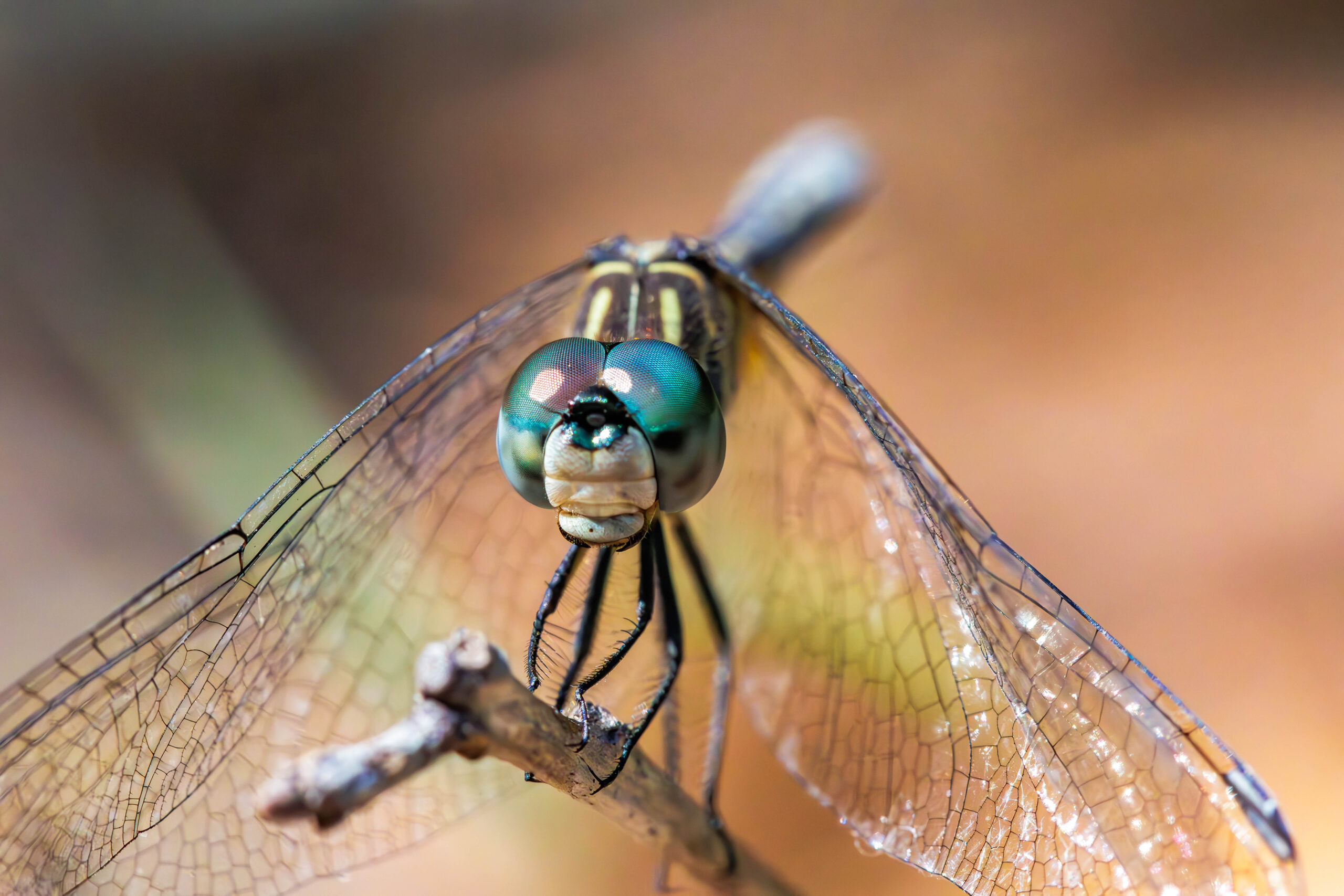
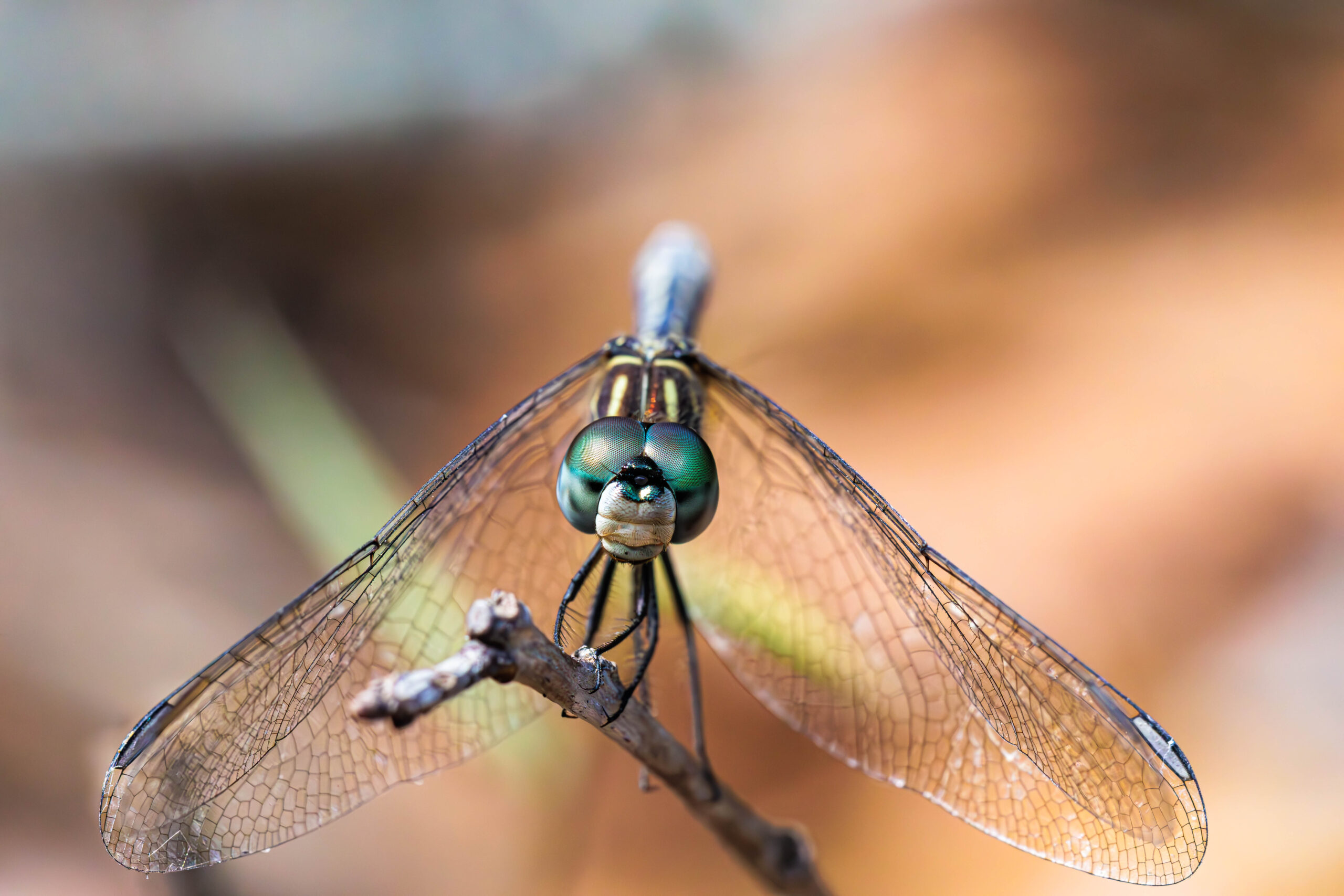
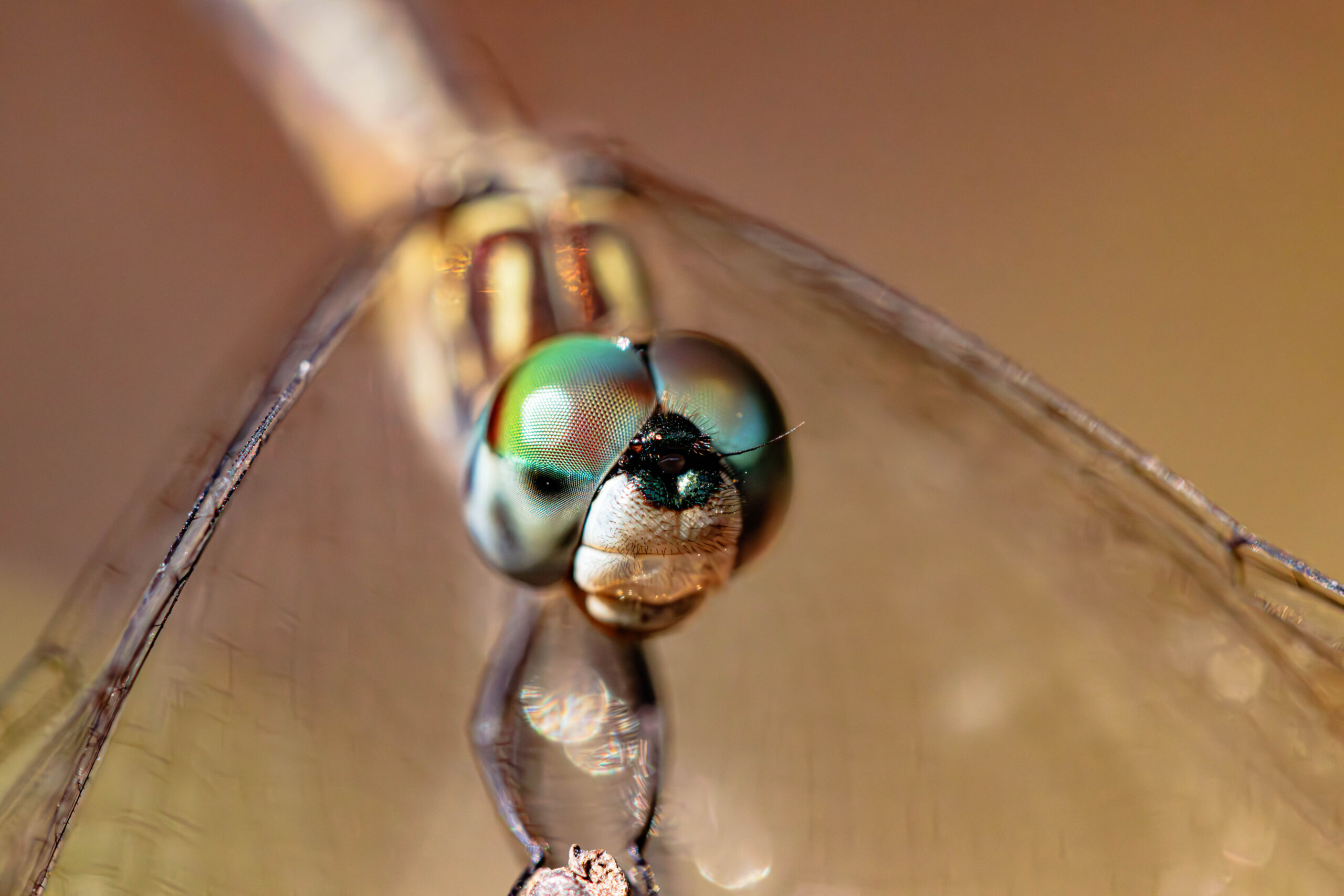
The blue dasher. a common dragonfly often seen hunting just above the waterline of warm, plant filled, ponds and lakes. The males are known for their powdery blue coloring and are fiercely territorial. they will often leave their perch to chase off rivals and guard their mates while they wait for food to pass by. The females can be found out of sight inside of dense shoreline foliage, blending in with their darker more brownish coloring.
common Name: Blue dasher
Scientific name: Pachydiplax longipennis
Family: Skimmers
Genus: Pachydiplax (monotypic: The Blue dasher is the only species in it’s Genus)
Extinction level: Globally Secure/Stable
Size: 28-45mm (1.0-1.7in)
Color: Males are powdery blue, females are brown and yellow with some blue
Eye Type: Compound, with three simple eyes on the top of the head for light sensing and flight stability.
Mouth type: Mandibles (adult), prehensile labium (nymph)
Identification: mature Males have powdery blue abdomens with brown and yellow striped thorax. they have green and blue eyes and their wings are tinted brown. females are brown and yellow without the powder blue thorax and they have red over gray eyes. when males are immature, they can often be confused for female as their blue coloring shows up gradually.
egg stage: 1-2 weeks
Aquatic Nymph: 1-4 years
Adult Blue Dasher: 3-10 weeks
Photos: All three photos show an immature male Blue dasher sitting on his perch.
Domain: Eukaryota
KINGDOM: animalia
PHYLUM: Arthropoda
CLASS: insecta
ORDER: odonata
SUBORDER: Anisoptera (dragonflies)
FAMILY: libellulidae (skimmers)
GENUS: Pachydiplax
SPECIES: Pachydiplax longipennis
Authority: Burmeister
YEar: 1839
Notes: The pachydiplax longipennis is the only species in the genus pachydiplax, making it a monotopic (only one species) Genus. It was originally described as libellula longipennis in 1839 by German zoologist-entomologist Hermann Burmeister. though In 1868 austrian entomologist Friedrich Brauer established the genus pachydiplax, and the species has since been classified as pachydiplax longipennis. Within that time period, french entomologist jules rambur published the name Libellula socia, which is has since been used as a synonym for the species.
egg STAGE: found loosely in aquatic vegetation tangle. they look like tiny, pale, jelly-coated beads. the jelly coating is a hydrating gel that helps the egg adhere to vegetation. under mild conditions, eggs can hatch in 1-3 weeks. just after, the hatchling enters a prolarva phase where it takes seconds to a few hours to emerge as a true nymph.
Nymph stage: The Aquatic blue dasher nymph is a micro ambush predator with green and brown camouflage. it has large eyes and large jaws that it can extend out to catch prey. They can go through multiple molts on their path to adulthood, and the number of molts depends on how long the blue dasher stays in the nymph phase. The general dragon fly range is 9-17 molts before final emergence. they can stay in this phase for up to 4 years. once they are ready, their wing pads turn dark, they leave the water, and they prepare their final molt on a vegetation surface just above the water line.
Adult Emergence: just after emergence, their wings and body take a few hours to harden. during this time, they fly poorly and are very vulnerable. male dashers initially present as female in their eye and body coloring. As they both reach maturity over the next week, the males eyes turn blue-green as they develop their blue abdomen coloring, and the females begin to grow their first eggs throughout their maturation process. Once this process is over, mating begins.
Mating Habits: Males guard a small territory and will attempt to intercept any female who passes through. They mate in the classic wheel position, and non-receptive females will not curve their abdomen to allow the male access. If the female is receptive, mating occurs. Copulation generally lasts under a minute, often just a few seconds, and mostly occurs in flight. When the male deposits sperm into the female’s storage organs (the bursa copulatrix and spermathecae), it can simultaneously attempt to remove or displace sperm from any previous mate, providing a higher fertilization chance. This isn’t always complete, so it’s possible for egg groupings to contain multiple fathers. Just after mating, the female will begin laying her eggs (ovipositing) while the male guards nearby. This short-term defense behavior from the male has been adapted to combat rival dashers who would otherwise harass and prevent the female from laying her eggs.
Egg laying Process: ovipositing is generally very quick. in a single bout, she can lay 300-700 eggs in roughly 30 seconds. Her preferred method of delivery is to fly just above the waters surface and repeatedly dip the tip of her abdomen into edge water vegetation. She then uses sperm from her storage organs to individually fertilize each egg as it passes through the vaginal canal. with each dip of her abdomen, she loosely deposits her eggs, where they then sink into the plant tangle below. this is known as exophytic oviposition. To increase hatchling survivability, she lays these spread out amongst the vegetation.
Death Stage: like any dragon fly species, death is mostly caused by predatory, accidental, or weather related causes. for those who avoid such ends, death generally starts with wing damage. this makes it harder to hunt, which eventually causes starvation. if the wings remain in better condition, old age will cause the muscles to weaken to the point where they become exhausted, cannot sustain flight, and can no longer thermoregulate properly. in their appearance, both males and females will become more dull in their coloring as they age, and the females red eyes can begin to turn green.
Habitat: Blue Dashers are strongly tied to freshwater with quiet and slow water, especially ponds, lakes, marshes, bogs, ditches, and slow moving streams and creeks. basically anywhere calm and with plenty of plant structure. They’re particularly associated with well-vegetated sites, often with floating and emergent vegetation, which provides perches, shelter, and egg-laying locations. the nymphs are especially tough and can survive in impaired waters with low levels of dissolved oxygen.
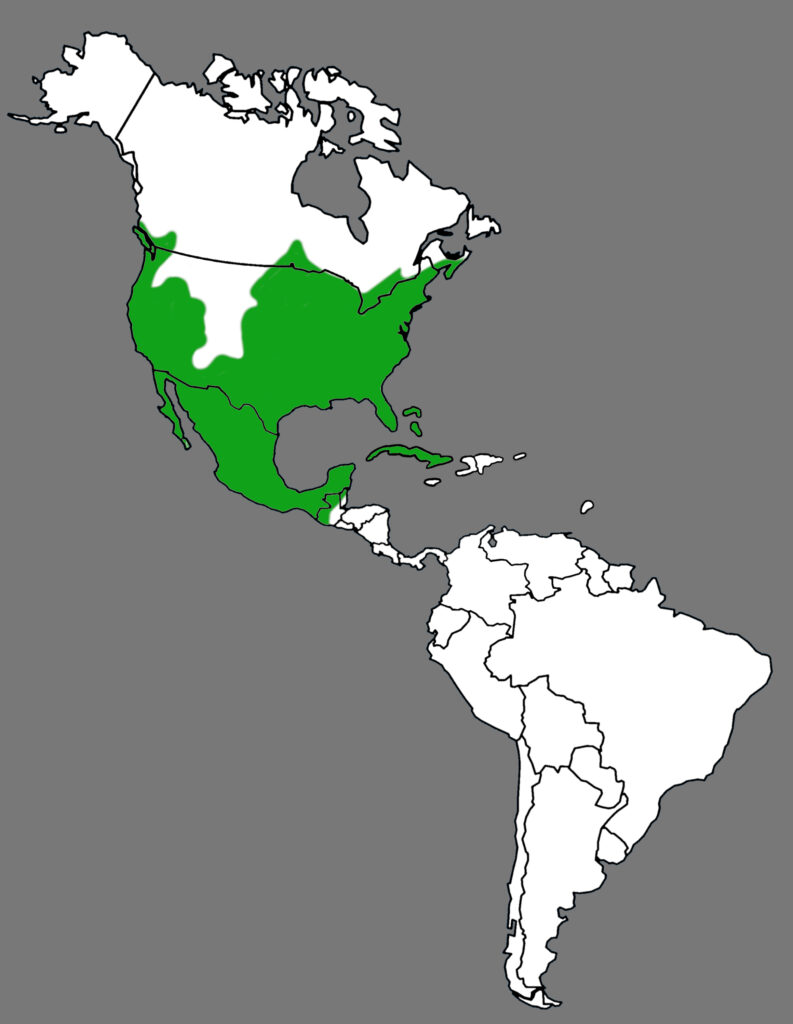
Range: The Blue Dasher ranges across most of the United States, barely into southern Canada, and continues south into Mexico. it’s also recorded in Cuba and parts of the Caribbean islands.
feeding group: predatory insectivores
Trophic Level: Secondary Consumer
Common nymph prey: mosquito, fly, and mayfly larvae, small freshwater shrimp, tiny fish, tadpoles
common adult prey: gnat sized fliers like mosquitoes and midges
main nymph predators: pond fish, crayfish, diving beetles, giant water bugs, other dragonfly nymphs
main adult predators: insectivorous Birds, spiders, other dragonflies, frogs, robber flies
Nymph Ecology: Blue Dasher nymphs live underwater and hunt as ambush predators, they hide in submerged vegetation and strike unsuspecting prey that drifts too close. They capture prey with an extendable “mask” (prehensile labium), which shoots forward extremely fast, clamps with the labial palps, and retracts to bring prey to the mouth for eating. Their diet is made mostly of small aquatic invertebrates, with a specific taste for mosquito larvae. larger nymphs can also take very small fish and tadpoles on occasion.
Adult Diet and Hunting Strategy: Adults mainly eat small flying insects and typically hunt from exposed perches. They will launch short flights to snatch flying prey and return to the same perch multiple times. They take tiny gnat-to-mosquito sized prey and use their legs like a basket to hold prey while in flight.
Behavior and Daily Activity: In the morning, the blue dashers muscles require warmth to work properly in flight so they begin their days “waking up” by perching in the morning sun. Once fully active, males will find a perch and begin defending their territory, spending much of their day chasing rivals from favored hunting grounds, especially around breeding zones. Around midday as the day gets hotter both males and females will shift to a shady perch and hunting can become constant. In the late afternoon heading into the evening more mating behaviors can be observed. Once the sun goes down and it becomes cooler, the blue dashers will find a hidden flower or leaf to sleep.
Tolerance and Indicator Meaning: Dasher Nymphs are especially tough and can survive in impaired waters with low levels of dissolved oxygen. That makes them an indicator species. If only dragonfly nymphs are found in a creek and no other benthic organisms, that might indicate a problem with water quality in that waterway.
Predators and Pressures: Both life stages face heavy predation pressure: nymphs are eaten by fish and other aquatic predators, and adults are taken by birds, spiders, and other insect predators.
